
Selling parts online 24/7 is one of the most straightforward revenue opportunities available to commercial truck, trailer, equipment, and agricultural dealers right now, and it is one of the most consistently underused. Your parts counter closes at the end of the day. The demand from fleet operators, owner-operators, and maintenance teams does not.
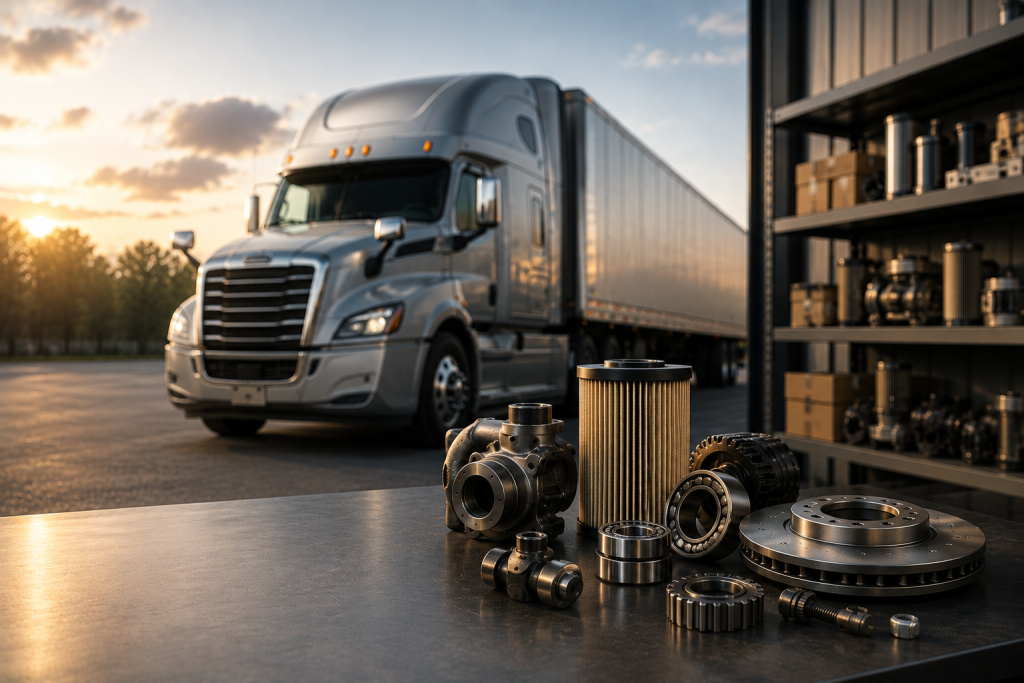
An online parts storefront changes that equation without adding headcount, changing your team’s workflow, or restructuring how your parts department operates. What changes is availability. Buyers who need to confirm stock, check pricing, or place an order outside business hours can do so. The revenue that used to wait until morning does not have to.
The Gap Between Counter Hours and Buyer Demand
Fleet operators work on schedules that do not align with dealer business hours. A maintenance manager planning the next day’s service needs answers at 9pm. An owner-operator who picks up a fault code at a truck stop at midnight needs to know if you have the part before they route to your location. A fleet coordinator placing a standing order for filters and fluids would prefer to do it without playing phone tag during the workday.
In each of those situations, the dealer whose inventory is visible and purchasable online captures the opportunity. The dealer without that channel either loses the sale or gets the call the next morning when the buyer has already found another option.
Most commercial parts revenue happens during counter hours because that is the only channel available. An online storefront does not create new demand. It captures demand that was already there.
Who Benefits Most From an Online Parts Storefront
Not every buyer segment uses an online parts channel equally, but the commercial dealer audience is well suited for it in a few specific ways.
Fleet maintenance teams
Fleets with scheduled maintenance programs have predictable, recurring parts needs. The maintenance manager who knows they need a specific set of filters, fluids, and belts every service cycle is a natural online buyer. Convenience and availability matter more than price for this segment. If they can place an order without a phone call and have it ready for pickup or delivered on their timeline, they will.
Owner-operators
Independent operators manage their own maintenance and often source parts on irregular schedules. When downtime happens, they need answers fast. A dealer whose parts are searchable, priced, and available to purchase online at any hour is in a stronger position with this buyer than one who requires a call during business hours.
Existing parts customers
The fastest path to online parts revenue is not finding new customers. It is giving existing ones a better way to keep buying from you. Fleet accounts and regular parts buyers who already trust your inventory are the most likely to adopt an online channel the moment one exists. For them it is not a change in where they buy. It is a more convenient way to do what they already do.
What Makes a Commercial Parts Storefront Different
A consumer auto parts store and a commercial dealer parts storefront are not the same thing. The buyers are different. The parts are different. The transactions are different. A platform built for retail auto parts does not automatically work for a dealer selling heavy duty commercial components to fleet operators.
Commercial parts buyers search by vehicle application, spec, and fitment data rather than browsing categories. They may be buying in quantities that trigger volume pricing. They may have existing fleet accounts with terms the online channel needs to reflect. And the parts themselves may require freight shipping rather than standard parcel carriers, which affects how pricing and delivery options are presented at checkout.
The catalog quality is what determines whether the storefront actually works for this buyer. A catalog organized for a counter transaction, where a knowledgeable parts person bridges the gap between what a buyer describes and what the part actually is, does not automatically translate into a catalog that works for a buyer searching independently online. That gap is where most commercial parts ecommerce projects either succeed or run into problems.
The storefront is the front end. What determines whether it works is the catalog quality and the operational readiness behind it.
How AI-Powered Search Changes the Parts Buying Experience
One of the most significant advantages of a purpose-built commercial parts ecommerce platform is how it handles imperfect searches. Commercial buyers often search in shorthand, use equipment-specific terminology, make typos, or describe a part by symptom rather than part number. A standard keyword search returns nothing or the wrong result.
An AI-powered parts search interprets buyer intent rather than requiring an exact match. A buyer searching for a phrase that approximates a part name, or describes what they need rather than what it is called, still finds the right result. In a commercial context where buyers are often searching quickly under operational pressure, that accuracy meaningfully reduces friction and increases the likelihood that a search ends in a purchase rather than a phone call or an abandoned session.
Making Your Parts Inventory Findable Beyond Your Own Website
An online parts storefront on your own website is the foundation. But commercial buyers searching for parts do not always start on a dealer’s website. They search on Google. They ask AI tools. They browse industry marketplaces. How well your parts inventory is structured and described determines whether it surfaces in those searches or stays invisible to buyers who are actively looking.
Parts pages that are structured with clear vehicle application data, specific descriptions, availability status, and location signals are far more likely to be found and cited by both Google and AI tools than pages with minimal content. A buyer asking ChatGPT whether a specific dealer has a part in stock gets a useful answer only if the dealer’s page gives the AI enough structured information to work with.
This is not a technical undertaking that requires a different website or a separate SEO project. It is a content and catalog structure decision that serves buyers searching on your site, on Google, and on AI tools simultaneously.
The Longer Picture
A parts storefront that operates around the clock does more than capture after-hours revenue, though that is a real and measurable benefit. It signals to buyers how seriously the dealership takes their experience.
The fleet operator who finds what they need at 11pm, places an order, and receives a confirmation is not just completing a transaction. They are forming an impression of the dealership that carries into every future interaction. That impression builds over time into the kind of trust that makes a buyer loyal to a dealer even when a competitor offers a slightly lower price.
The counter closes. The relationship does not have to.
See How Buzznerd Builds Parts Ecommerce for Commercial Dealers
Buzznerd builds AI-powered parts ecommerce platforms for commercial truck, trailer, equipment, and ag dealers as part of a connected dealership platform. If you want to understand what an online parts storefront looks like for your dealership and your inventory, book a demo and we will walk through it with you.